


Ahmad Wallizada is the Section Head for Pre-analytical automation in our Auckland lab and took out the winning prize for the Innovation Showcase at Co:Lab for his talk “DIY in a busy lab”. He’s been 3D printing parts and tools that fix everyday problems on the lab floor. We asked him how it started, what he’s made, and what he’d tell anyone with an idea of their own.
Congratulations on the Innovation Showcase win. What did you present, in a nutshell?
The talk was called “DIY in a busy lab”. It was about the small things we’re doing in the lab that make our workflow, and our lives, a lot easier.
Where did the idea come from?
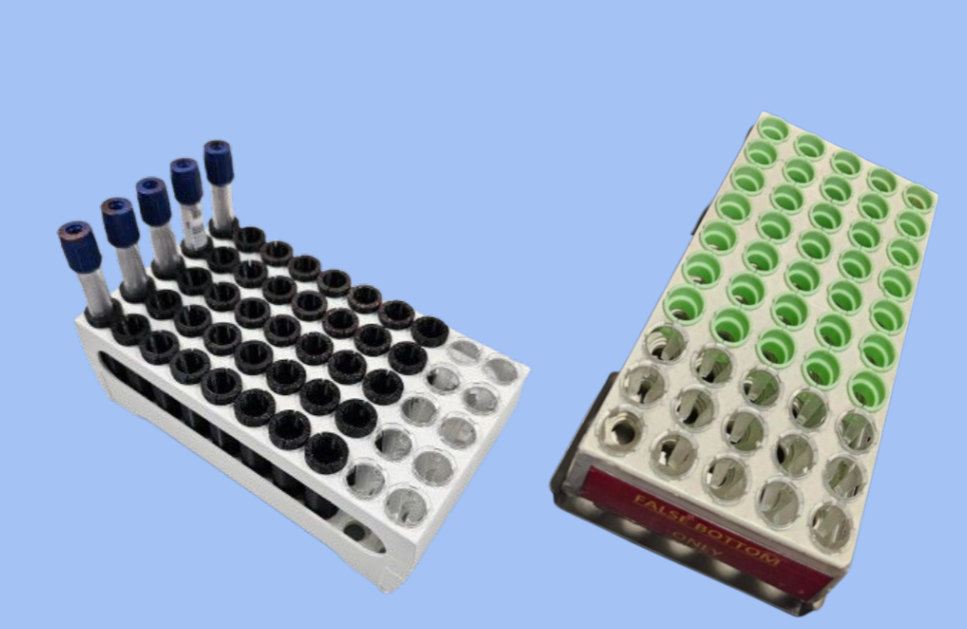
Our analysers were smashing our delicate aliquoting tubes. We have over 500 trays in the lab, and each one has about 100 inserts. Keeping every insert perfect all the time is hard. If an insert was even slightly broken, the tube wouldn’t sit straight, and the gripper arms would hit it.
So we tried designing our own inserts. We tested them, they worked, and we’re still using the same ones more than a year later. That matters because those tubes carry precious samples. Some come from patients who are difficult to collect from, so there isn’t much serum. If you lose it, the patient has to come back for a recollect, and that’s not a nice experience for anyone.
Is that the piece you’re proudest of?
We make little things all the time, but a couple come to mind. Some of our long trays lost their handles through normal wear and tear, and people were cutting their hands on the exposed parts. Replacing the trays is expensive. A 3D-printed handle costs less than a dollar to make, so we replaced the handles across our whole stock. We handle those trays all day, so it’s made a big difference.
We’ve also made a simple jig for sample disposal, which involves a lot of manual work. It slots through the holes in the racks and drops the samples straight into the bins. This is a shared pain point across some of our other labs in NZ, and they’ve also tried building their own DIY solutions. It would be great if we could work together to make something that all our sites could use.
What was the biggest challenge in getting it all working?
Your first design won’t always work. 3D printers are very accurate, but you have to learn how to make the design work, and that means going through several versions. We don’t have a printer in the lab yet. So I’d find the problem in the lab, fix the design, print it, bring it back in and test it, again and again.
Where could this go next at Awanui?
It’s not only about 3D printing. DIY in general is a powerful tool. You can make custom solutions to your everyday problems instead of waiting for something to turn up on the market, which often won’t fit your needs anyway. You can solve problems quickly and shape the fix around what your team actually needs.
Tell us about your role and your time at Awanui.
I recently received my 10-year service award. I started in Specimen Services, moved to Biochemistry, and I’m now Section Head of Pre-Analytical Automation. We have a lot of machines at the front and back end that need attention, and that’s my job. I work with a great team, with Natasha as our Head of Department, and we process 10,000 plus samples a day.
Was 3D printing a hobby before it was a work tool?
Yes. It started as a hobby, but before I could even get to my own projects it was “hey, these are things we need for work.” Now it takes up a good part of my day sometimes.
If a colleague has an idea like this, what should they do first?
Do a lot of research, because it can get expensive and you don’t want to buy something and then find out you don’t need it. Talk to people who’ve used the products, especially about troubleshooting. That’s a big part of it, maybe 40%. There are plenty of tutorials and online communities where people have hit the same issues. Keep reaching out and trying things until you solve the problem, and see what you can do together.
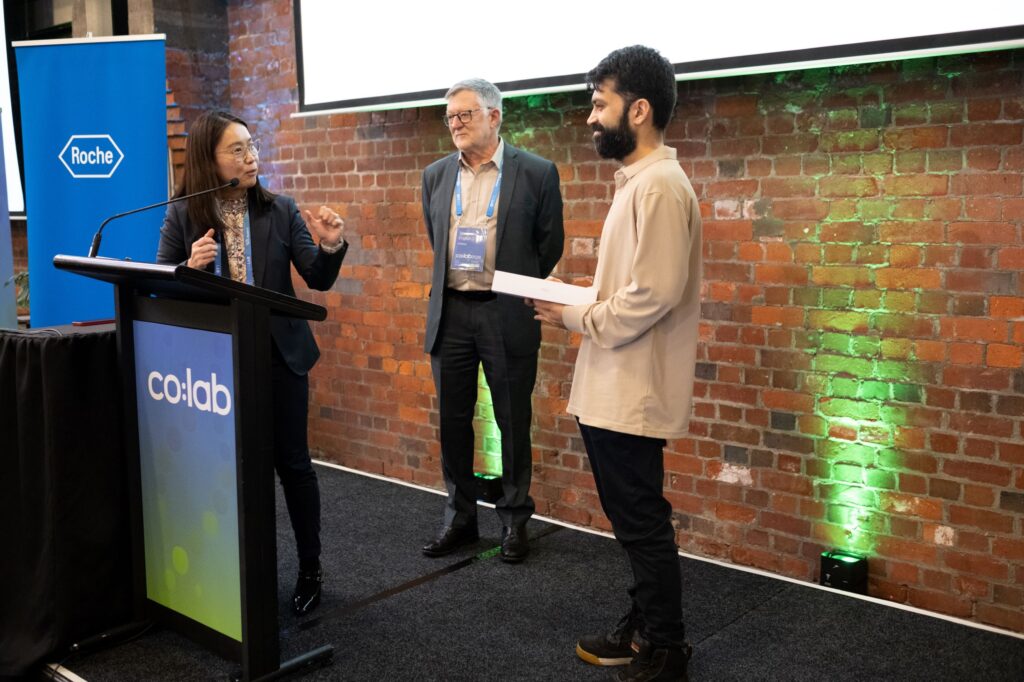
Wing Lam Wong, General Manager of Roche Diagnostics NZ presents Ahmad his award.
The Innovation Showcase at CoLab is sponsored by Roche Diagnostics NZ.