

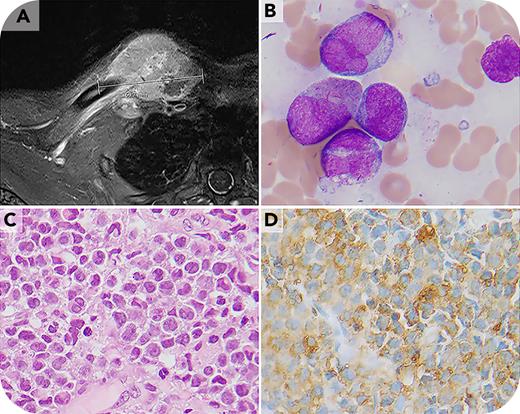
Awanui Haematologist Dr Anna Wan was recently recognised by “Blood”, the world’s leading haematology journal, for making a diagnosis which identified one of the rarest manifestations of cancer in a patient’s biopsy.
“The American Society of Hematology published the results of this biopsy and imaging because what we found was so rare,” says Anna, who is based in Dunedin.
“The biopsy initially showed what appeared to be a myeloid sarcoma, which occurs when immature white blood cells form cancerous tumours from a soft tissue sample inside the patient’s clavicle.
“We investigated further and found the presence of acute promyelocytic leukaemia (APL), a subtype of acute myeloid leukaemia (AML), which itself is linked to myeloid sarcoma.”
Anna says APL is usually detected in the peripheral blood on full blood count and involves the accumulation of immature white blood cells within the bone marrow. Therefore, when APL was detected in the soft tissue and not the blood or bone marrow, something was not right.
“Very detailed testing and analysis of the blood, bone marrow and two clavicular biopsy samples involving different labs were carried out,” says Anna.
“It was through this investigation, the tumour was actually acute promyelocytic leukaemia presenting as a myeloid sarcoma, which I have not seen in fifteen years working in haematology” says Anna.
The official World Health Organization’s classification of Haematolymphoid Tumours states, “De novo isolated myeloid sarcoma with morphologically normal-appearing bone marrow is rare, occurring in about one percent of patients with AML.”
“This was an extremely isolated case, but because we identified what form of cancer we were dealing with, we got the right outcome for the patient who could receive the correct form of treatment and chemotherapy.
“It is also good to see the article published in the journal and share our findings with others in haematology and across pathology around the world, so they can learn from this case,” says Anna.
You can read the full article on Anna’s investigation and diagnosis and see the images of the biopsy on the Blood website – click here.